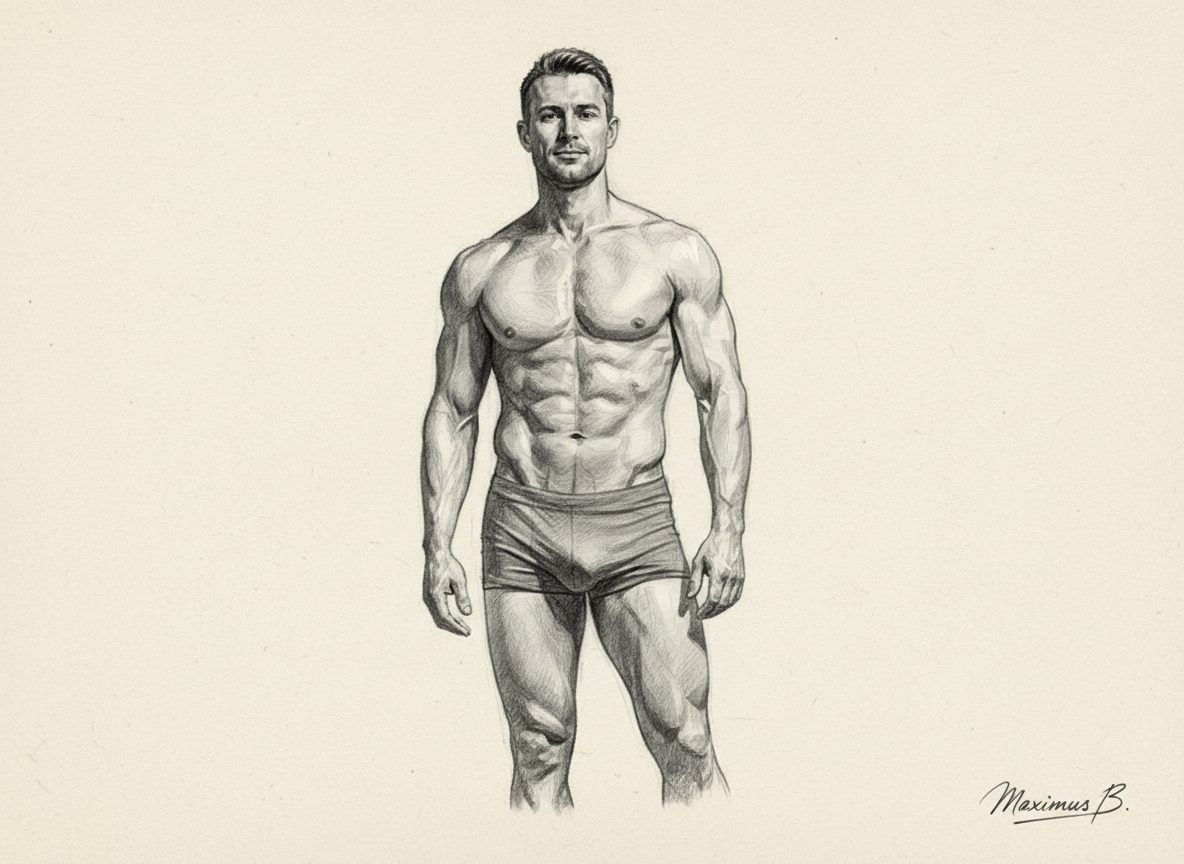
Natural asymmetry in male figure drawing is one of the quiet markers of maturity. Real bodies are not mirrored objects. One shoulder sits higher. One clavicle is longer. The pelvis is rarely level. Even the face — the thing we instinctively want to “correct” — carries tiny, human imbalances.
If you remove these differences, your drawing becomes generic. If you exaggerate them, it becomes mannered. The goal is a third thing: truthful asymmetry that supports structure, weight, and character.
Natural Asymmetry in Male Figure Drawing: Where It Lives
Start by looking for asymmetry in the places that carry load and rhythm — not in surface detail. In most poses, the body solves balance through small offsets.
- Shoulders: one acromion higher, one clavicle more open.
- Pelvis: one iliac crest higher; one hip compresses.
- Ribcage vs pelvis: they rarely face the same direction.
- Hands and feet: one hand relaxes, the other holds tension.
- Face: subtle differences in eye height, brow angle, mouth corner.
The Biggest Trap: Symmetry as “Correctness”
Many artists unconsciously “repair” the figure as they draw it. They level the shoulders. They centre the head perfectly. They make both pectorals identical. It feels like accuracy — but it is actually a kind of denial.
The classical discipline is to accept what you see. If the sternum line drifts slightly, let it drift. If the pelvis tilts, commit to it. The drawing becomes more believable because the decisions have consequences.
A Practical Way to Measure Asymmetry (Without Overthinking)
Use simple comparisons. You do not need complicated anatomy knowledge — you need a few honest checks.
- Drop a vertical plumb line from the pit of the neck.
- Compare shoulder heights (acromion to acromion).
- Compare iliac crest heights (hip rim to hip rim).
- Check the head tilt relative to the sternum line.
- Look for compression vs stretch on the sides of the torso.
If you want the structural foundation behind this, read: Pelvis and Weight in Figure Drawing. Natural asymmetry is often just the visible result of weight.
Graphite Rendering: Let the Strokes Keep It Human
In graphite, symmetry is often reinforced by overly smooth blending. When everything is polished, the drawing becomes “perfect” — and perfection is rarely convincing.
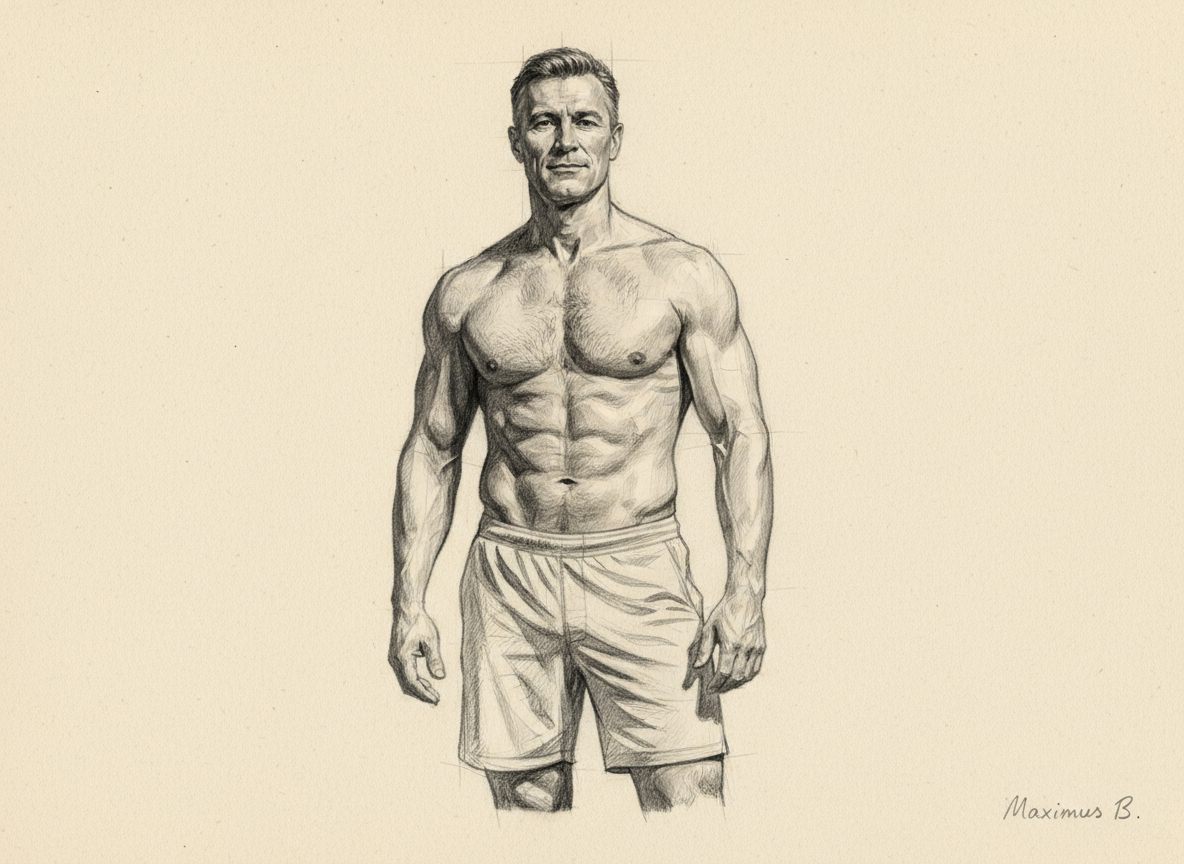
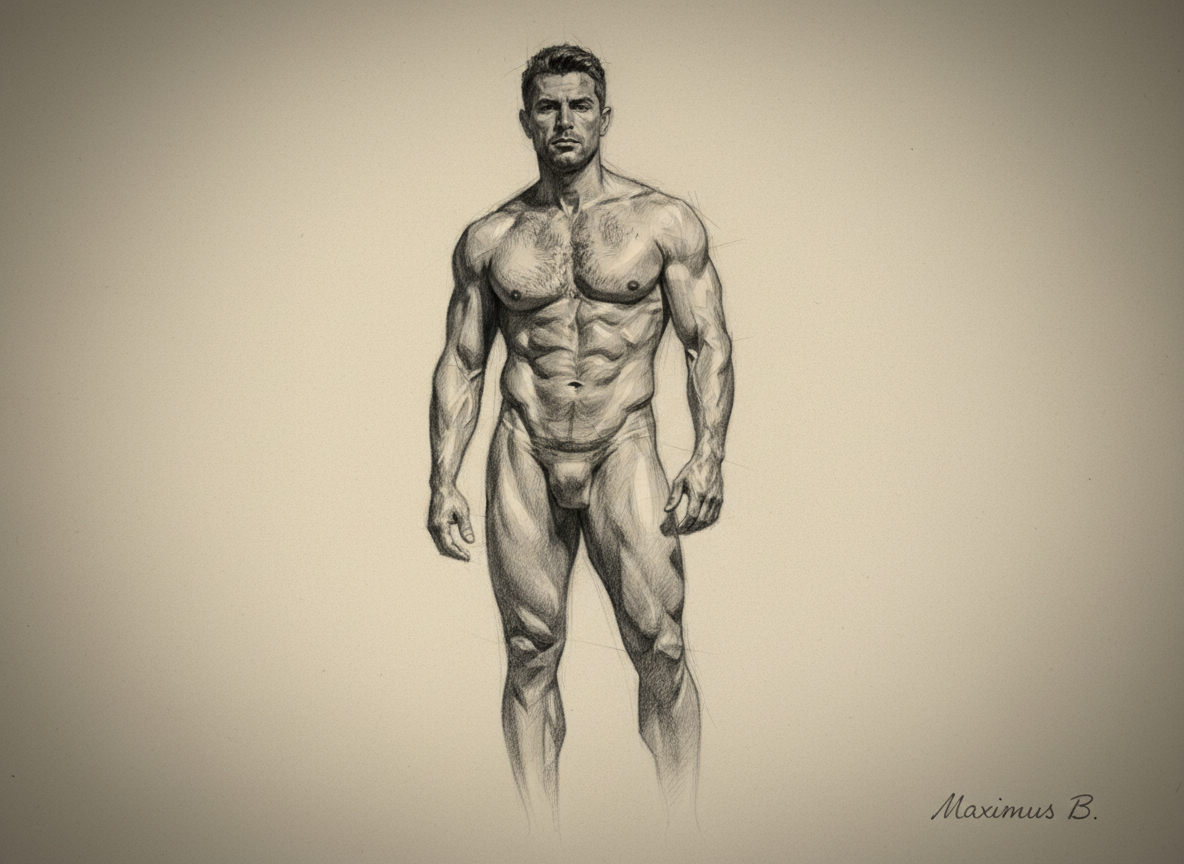
Keep construction lines visible. Let stroke direction follow the form. Allow small irregularities in pressure and edge quality. This is not mess. It is evidence of a real hand.
Supporting Visual Studies (Full Body)
Two supporting studies for today’s topic. Both are full-body graphite studies with visible construction lines and the signature in the lower right. Models read adult 26–42.
The Complete Path
Natural asymmetry is not a separate “style”. It is what happens when you draw weight, structure, and rhythm honestly. For the torso side rhythm that often reveals asymmetry most clearly, continue with Obliques and Torso Rhythm.
And for the full course structure — from first gesture marks to finished graphite rendering — explore Mastering the Male Figure.