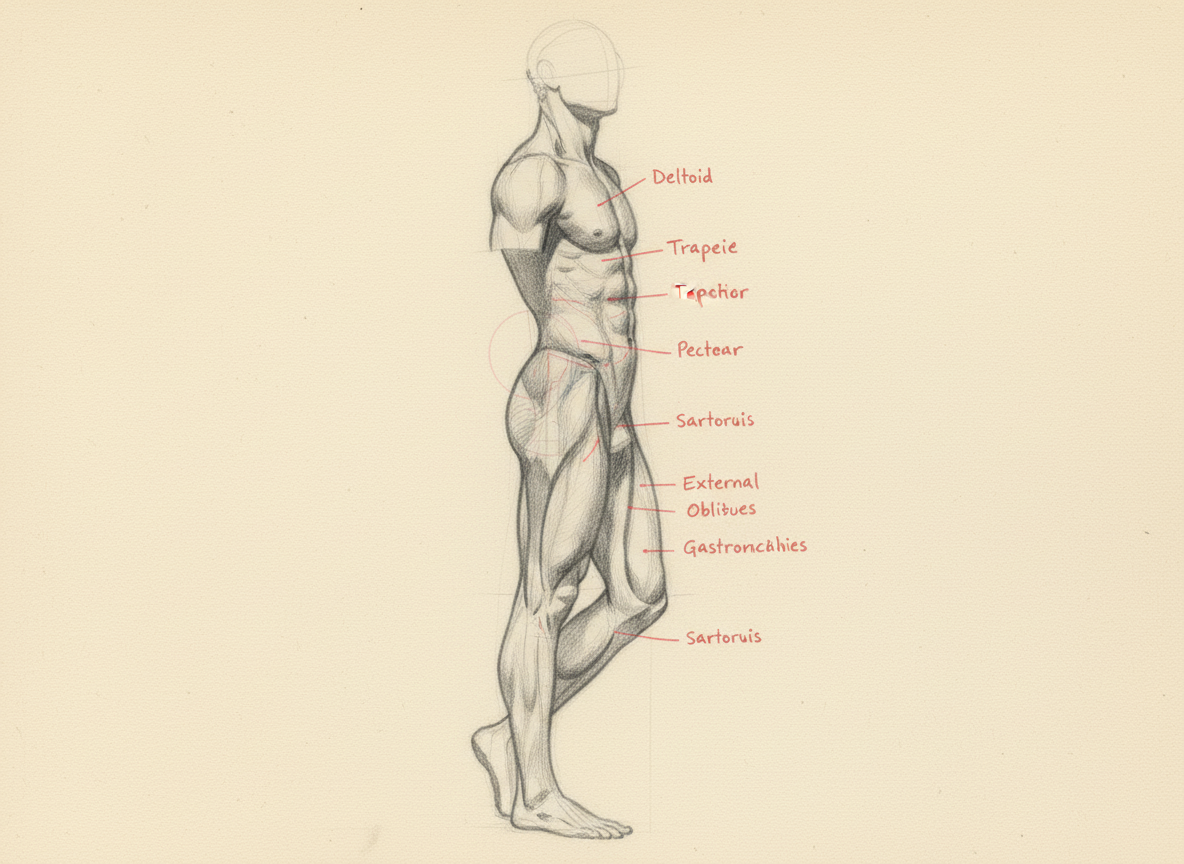
Over 30 years of self-study, I have read, studied, and worked through dozens of figure drawing and anatomy books. Most were adequate. A handful were transformative. This is my curated list of the books that genuinely shaped my understanding of the male figure — the ones I return to again and again, and the ones I recommend to every serious artist.
These are not affiliate links or sponsored recommendations. These are the books that earned their place on my studio shelf through years of use.
1. “Atlas of Human Anatomy for the Artist” by Stephen Rogers Peck
If you own only one anatomy book, make it this one. Peck's atlas is the most clear, practical, and artist-focused anatomy reference ever published. Every muscle, bone, and surface landmark is illustrated with precision and explained in plain language.
Best for: Understanding the skeletal and muscular structure beneath the surface. Essential for anyone learning to draw the male figure from scratch.
Level: Beginner to advanced. You will use this book for your entire career.
2. “Figure Drawing for All It's Worth” by Andrew Loomis
Loomis is the master of making complex concepts accessible. This book covers everything from basic proportions to advanced figure construction, with a warmth and clarity that makes it a joy to study. His approach to the head unit system and proportion is the foundation I still use today.
Best for: Building a complete figure drawing foundation. Ideal for self-taught artists.
Level: Beginner to intermediate.
3. “Anatomy for the Artist” by Sarah Simblet
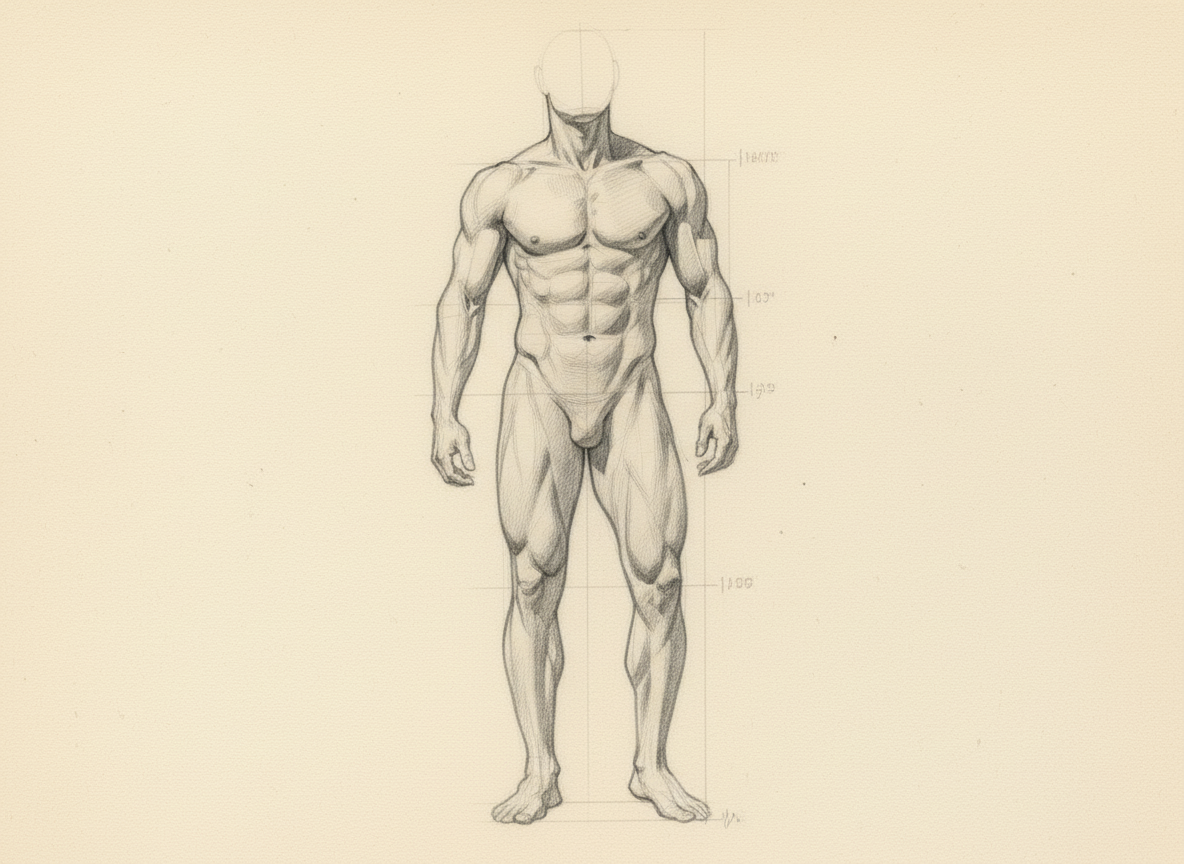
Simblet's book is visually stunning — large-format photographs of the human body overlaid with anatomical drawings that show the relationship between surface form and underlying structure. It is both a reference and an inspiration.
Best for: Visual learners who want to see anatomy in context on real bodies. Excellent for understanding how muscles look in different poses and lighting conditions.
Level: Beginner to advanced.
4. “The Artist's Complete Guide to Figure Drawing” by Anthony Ryder
Ryder's approach is methodical and deeply practical. He teaches a systematic process for building a figure drawing from the first mark to the final detail, with an emphasis on accurate observation and tonal control. His approach to shading and tonal values is particularly valuable.
Best for: Artists who want a structured, step-by-step method. Excellent for developing discipline and accuracy.
Level: Intermediate.
5. “Dynamic Anatomy” by Burne Hogarth
Hogarth's work is dramatic, expressive, and unapologetically bold. His approach to the male figure emphasises dynamic poses, exaggerated musculature, and powerful gesture. While not strictly classical, his books are invaluable for understanding how the body moves and how to capture that movement on paper.
Best for: Understanding dynamic poses and the male figure in motion. Excellent for developing a sense of drama and energy in your drawings.
Level: Intermediate to advanced.
6. “Constructive Anatomy” by George Bridgman
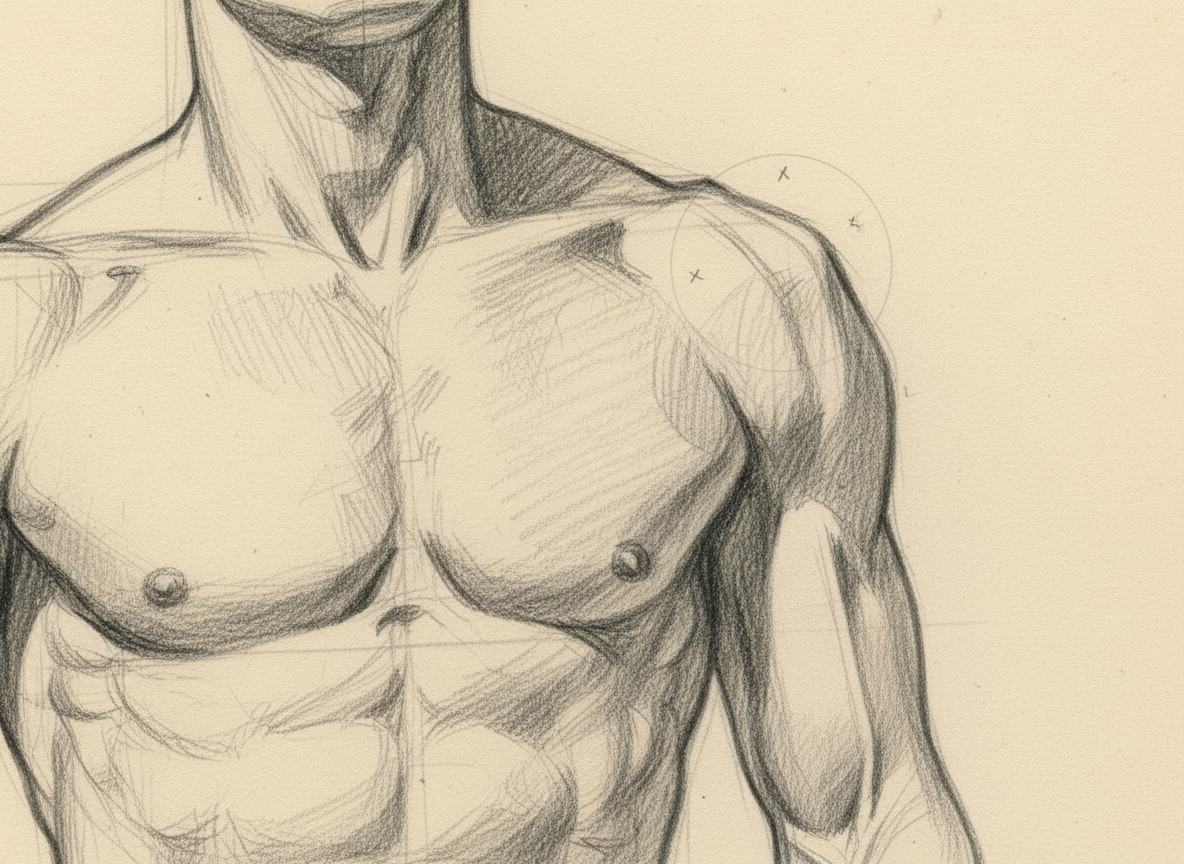
Bridgman's approach is structural — he teaches you to build the figure from geometric forms, understanding how each body part connects and overlaps. His drawings are rough and energetic, but the underlying principles are rock-solid.
Best for: Understanding the three-dimensional construction of the figure. Essential for anyone who wants to draw the figure from imagination rather than only from reference.
Level: Intermediate to advanced.
7. “Classical Drawing Atelier” by Juliette Aristides
Aristides brings the atelier tradition into a modern, accessible format. Her book covers the full classical drawing curriculum — from cast drawing to figure drawing — with beautiful reproductions and clear instruction. If you want to understand the tradition that my own work is rooted in, this is the book.
Best for: Understanding the classical atelier approach to drawing. Excellent for artists who want to develop a refined, academic style.
Level: Beginner to advanced.
How to Use These Books Effectively
Reading is not enough. These books must be worked through. Here is my recommended approach:
- Study, then draw. Read a section, then immediately practise what you have learned. Do not read the entire book before picking up a pencil.
- Copy the master drawings. Reproducing the illustrations in these books is one of the most effective ways to internalise the principles they teach.
- Return regularly. You will understand these books differently at each stage of your development. What seems obvious now will reveal new depth in a year.
- Combine with practice. Use these books alongside your life drawing and reference work. Theory without practice is empty; practice without theory is blind.
And My Own Contribution
My book Mastering the Male Figure is designed to complement these classics — not replace them. It offers what most of these books do not: a structured, progressive course specifically focused on the male figure, with 60 lessons that take you from first lines to finished detail, practice pages for every stage, and the graphite pencil techniques I have refined over 30 years.
It is the book I wish had existed when I started.