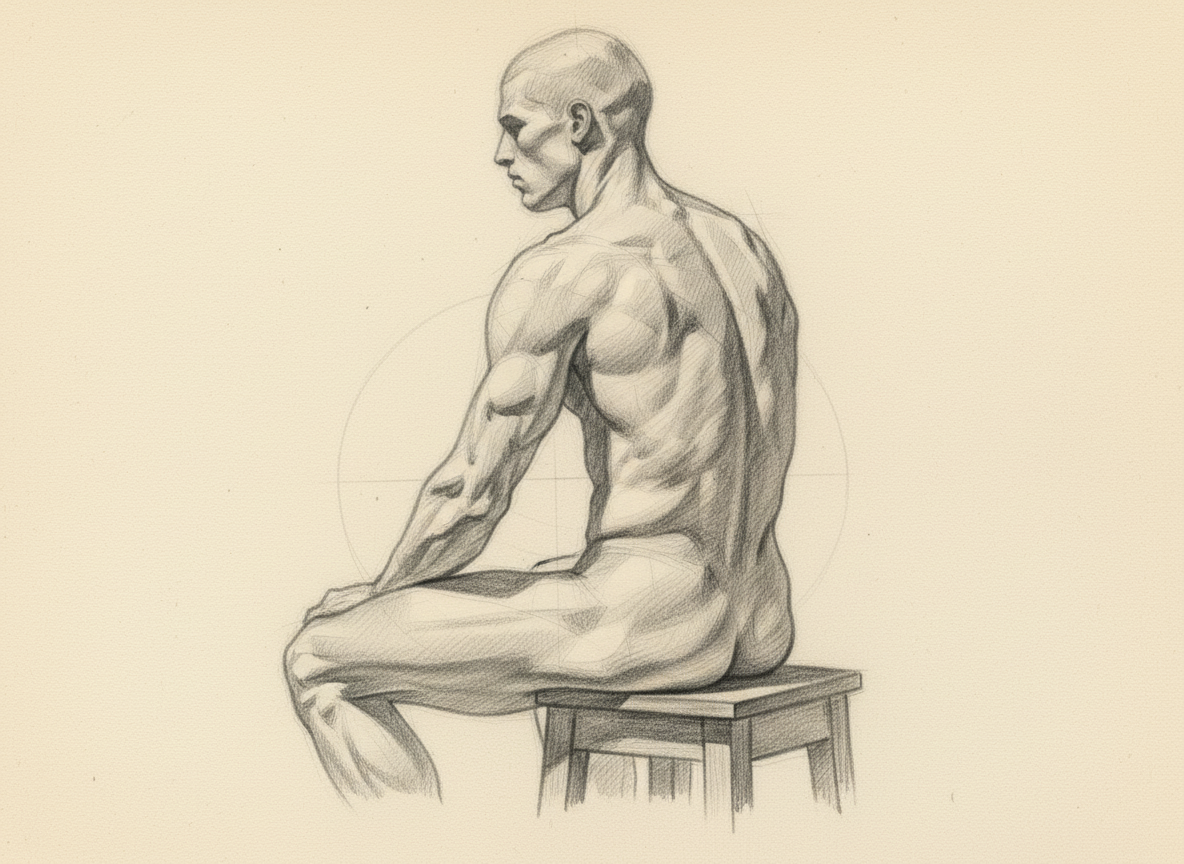
This is the debate every serious figure artist faces at some point: should I attend life drawing sessions with a live model, or can I learn just as effectively by working from photographs and reference images at home?
I have done both — extensively — over more than 30 years. Here is an honest, experience-based breakdown of the strengths and limitations of each approach, and how to combine them for maximum growth.
The Case for Life Drawing
Drawing from a live model is the gold standard of figure drawing education. There is a reason every serious atelier, art academy, and classical drawing programme in the world — from Florence to London to New York — centres its curriculum around life drawing sessions.
What life drawing gives you that reference cannot:
- Three-dimensional observation: A live model exists in real space. You can see how light wraps around forms, how shadows change as you shift your viewpoint, and how the body occupies volume. A photograph flattens all of this into two dimensions.
- Time pressure: Life drawing sessions typically run in timed intervals — 2 minutes, 5 minutes, 20 minutes, 45 minutes. This forces you to make decisions quickly, prioritise what matters, and develop fluency.
- Gesture and energy: A live model breathes, shifts weight, and holds tension. Even in a “still” pose, there is life. This subtle energy transfers into your drawing in ways that are difficult to replicate from a static photograph.
- Community and feedback: Drawing alongside other artists provides motivation, perspective, and informal critique that accelerates learning.
The Case for Working from Reference
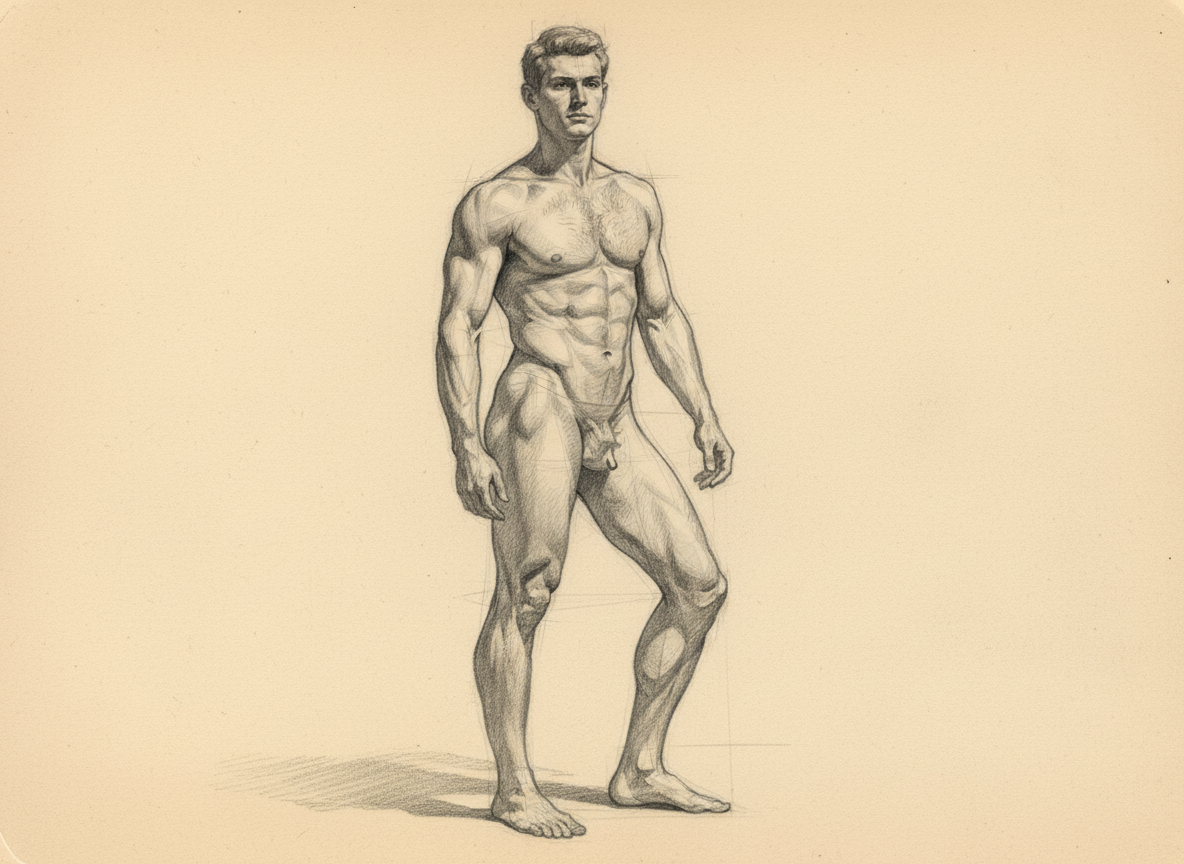
Working from photographs and reference images has its own significant advantages — particularly for self-taught artists who may not have easy access to life drawing sessions.
What reference gives you that life drawing cannot:
- Unlimited time: You can study a pose for hours, days, or weeks. There is no timer. This is essential for long, detailed studies where you need to carefully render anatomy and tonal values.
- Consistency: The pose never changes. The lighting never shifts. You can return to the same reference repeatedly and build on your previous work.
- Accessibility: You can work from reference anywhere, at any time. No studio, no model, no schedule. For artists with limited time or resources, this is transformative.
- Specific study: You can choose references that target exactly what you need to practise — a particular muscle group, a specific lighting angle, a challenging pose.
The Limitations of Each
Life drawing limitations: Sessions are scheduled and often expensive. You cannot control the pose, the model, or the lighting. Short poses do not allow for detailed anatomical study. And in many cities, finding sessions that focus specifically on the male figure can be difficult.
Reference limitations: Photographs flatten three-dimensional form. They can distort proportions (especially wide-angle lens distortion). And working from reference alone can lead to a habit of copying rather than understanding — reproducing what you see without learning why the forms look the way they do.
My Recommendation: Combine Both
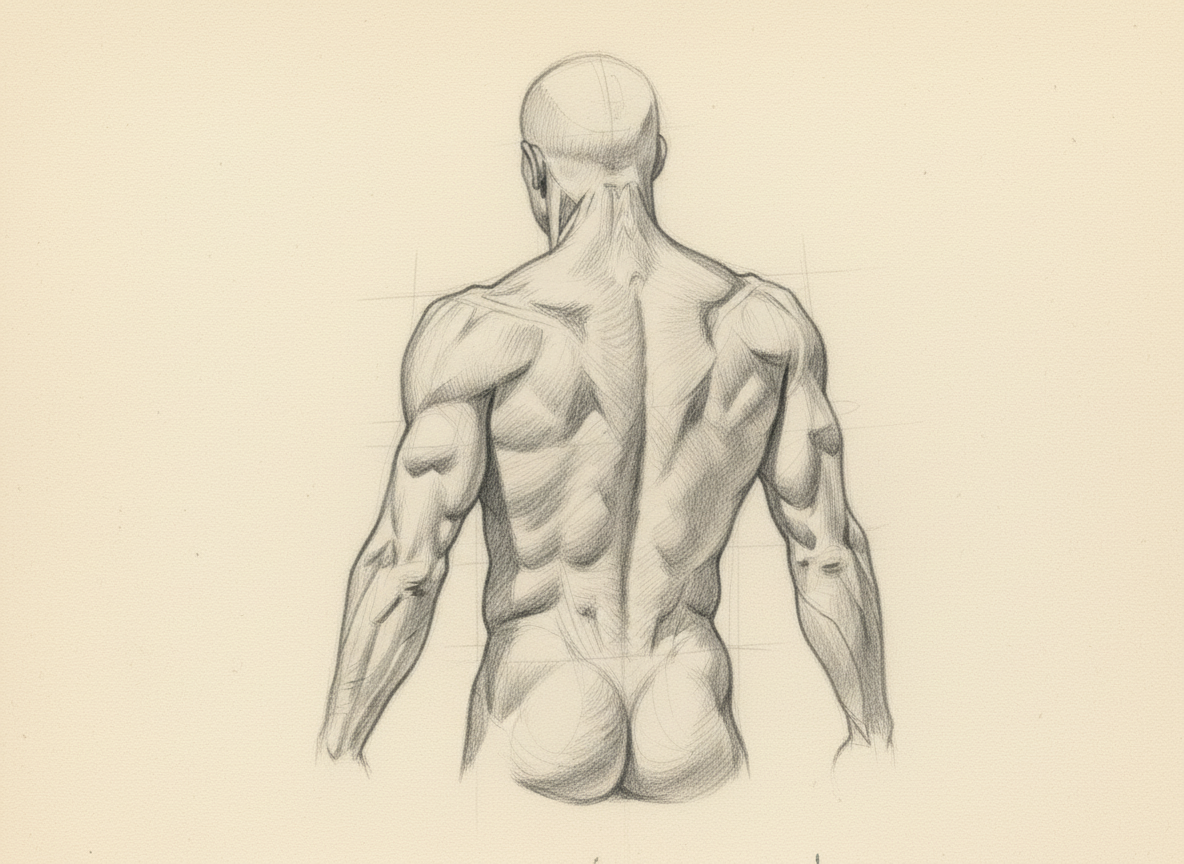
The most effective approach — and the one I have used throughout my career — is to combine life drawing and reference work strategically:
- Use life drawing for gesture and observation skills. Attend sessions regularly if you can. Focus on quick poses (2–5 minutes) to develop fluency and the ability to capture movement.
- Use reference for long studies and anatomical detail. When you want to spend 3–5 hours on a single drawing, working from a carefully chosen reference allows the focus and consistency you need.
- Study anatomy separately. Neither life drawing nor reference alone teaches you anatomy. Use dedicated anatomy books to understand the structures beneath the surface.
- Draw from memory. After studying a pose from life or reference, close the reference and draw it again from memory. This is where real understanding is built.
For the Self-Taught Artist
If you are learning on your own — as I did for most of my career — do not feel that the absence of life drawing sessions is a barrier. It is not. Many of the greatest draughtsmen in history worked primarily from reference and anatomical study.
What matters is how you work from reference. Do not simply copy. Analyse. Ask yourself: where is the light coming from? Which muscles are engaged? How does the weight shift through the pose? What is the gesture of this figure?
If you approach reference work with this level of intentionality, you will learn just as effectively as someone attending life drawing sessions three times a week.
The Complete Path
My book Mastering the Male Figure is designed specifically for artists who want a structured, progressive course they can follow at home — combining the best of reference-based study with the anatomical understanding and pencil techniques that produce professional-quality results.